
Selecting the correct disposable coveralls is not a procurement decision, it is a workplace risk management decision.
Across South African industries such as food manufacturing, pharmaceuticals, chemical processing, mining support services, industrial cleaning, and general manufacturing, protective coveralls form a critical barrier between employees and occupational hazards. Choosing incorrectly can compromise worker safety, disrupt compliance, increase contamination risks, and drive unnecessary operational costs.
The South African regulatory landscape places clear responsibilities on employers to provide appropriate workplace safety apparel based on risk exposure. This includes compliance with occupational health and safety legislation, hygiene standards, and sector-specific requirements.
Understanding the differences between nonwoven coveralls, Microtext coveralls, and Type 5/6 coveralls is essential for ensuring PPE compliance in South Africa while maintaining operational efficiency.
At Pinnacle Protection Enterprises, industry guidance is rooted in risk assessment, technical understanding, and practical application, not generic product selection.

Fabric Composition: Spunbond Polypropylene
Nonwoven coveralls are typically manufactured from spunbond polypropylene (SBPP), a lightweight and breathable material produced by bonding polypropylene fibres together through thermal processes.
This construction provides basic barrier protection against dry particulates and low-level contamination. The fabric is generally breathable, making it suitable for extended wear in moderate environments.
Protection Level and Limitations
Nonwoven coveralls are designed primarily for:
- Protection against nuisance dust
- Protection against non-hazardous dry particles
- Basic hygiene control
- Minimal splash exposure (non-pressurised and non-hazardous)
However, they are not suitable for:
- Hazardous fine particulate exposure
- Chemical handling
- High liquid splash environments
- Pharmaceutical cleanroom applications requiring validated barrier performance
They do not typically carry Type 5 or Type 6 certification and should not be used where regulatory classification is required.
Ideal Industries and Applications
In the South African context, nonwoven coveralls are commonly used in:
- Food manufacturing hygiene zones
- Visitor protection in production facilities
- General manufacturing environments
- Warehousing and logistics
- Painting preparation (non-solvent intensive)
- Agricultural operations
Typical Job Roles
- Line workers in food processing plants
- Quality control inspectors (low-risk areas)
- Warehouse personnel
- General maintenance staff
Key Specifications
Most nonwoven protective coveralls include:
- Elasticated cuffs and ankles
- Hooded design
- Front zipper closure
- Breathable fabric
- Low linting properties
These features support contamination control while ensuring wearer comfort.
When They Are Appropriate, and When They Are Not
Nonwoven coveralls are appropriate in low-risk environments where the primary concern is cleanliness, hygiene, and light particulate exposure.
They are not appropriate where there is exposure to hazardous dust, infectious materials, fine particulates, or chemical splashes.
A common compliance mistake is assuming that “a coverall is a coverall.” In regulated industries, that assumption can create significant liability.

Microporous Laminate Construction
Microtex coveralls (often referred to as microporous coveralls) are constructed from a polypropylene base laminated with a microporous polyethylene film. This layered structure dramatically improves barrier performance while maintaining breathability.
The microporous membrane allows air vapour to pass through while blocking fine particles and light liquid splashes.
Breathability vs Barrier Performance
Compared to standard nonwoven coveralls, Microtex coveralls offer:
- Superior fine particle filtration
- Improved resistance to light liquid splashes
- Enhanced durability
- Better tear resistance
This makes them suitable for environments where risk levels are elevated but not necessarily requiring fully taped seam chemical protection.
Resistance to Fine Particles and Light Liquid Splashes
Microtex coveralls provide effective protection against:
- Dust from cement, silica, and light industrial materials
- Overspray during industrial cleaning
- Light chemical splashes (non-pressurised)
- Contamination-sensitive environments
They are commonly aligned with Type 5 and/or Type 6 performance levels depending on certification.
Suitable Industries and Tasks
In South Africa, Microtex coveralls are frequently used in:
- Pharmaceutical manufacturing (non-sterile areas)
- Chemical blending operations
- Mining support services (dust-intensive tasks)
- Industrial cleaning contractors
- Automotive spray preparation
Performance Advantages Over Standard Nonwoven Coveralls
Microtex coveralls bridge the gap between basic hygiene protection and regulated protective apparel.
Advantages include:
- Greater barrier integrity
- Reduced particle penetration
- Increased wearer confidence
- Improved compliance alignment
Where nonwoven coveralls may be insufficient, Microtex coveralls offer a practical step up without moving immediately to full chemical protective suits.
Typical Compliance Considerations
For PPE compliance in South Africa, employers must consider:
- Hazard identification and risk assessment
- Exposure type (dust vs liquid vs chemical)
- Required classification (if applicable)
- Documentation of PPE suitability
Failure to align coverall selection with documented risk assessments can create regulatory exposure.
Understanding Type 5 and Type 6 Classifications
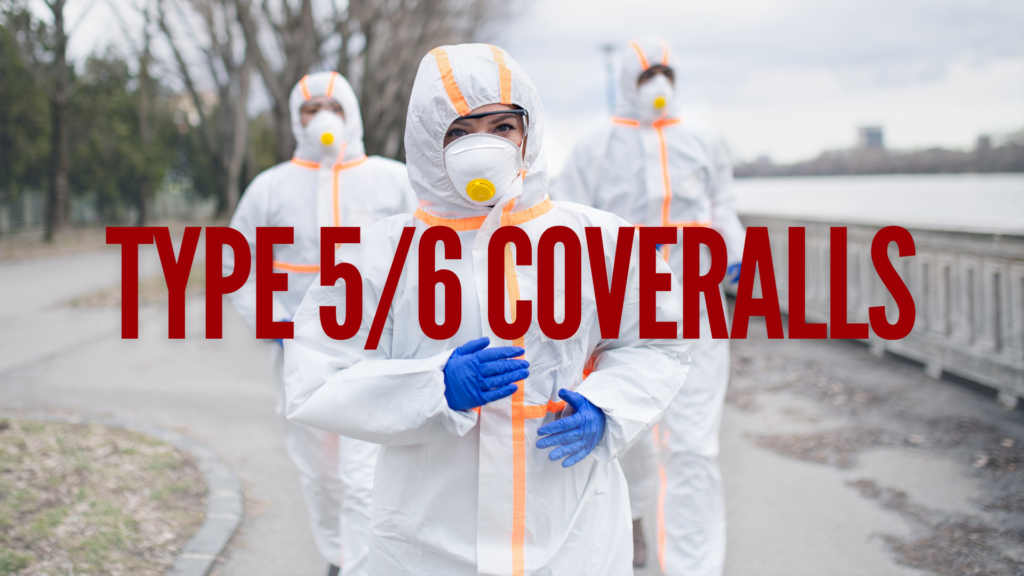
Type 5/6 coveralls are certified protective garments tested against specific European standards (commonly adopted in South Africa as benchmark performance standards).
- Type 5: Protection against hazardous dry particles
- Type 6: Limited protection against light liquid splashes
These classifications indicate that the garment has undergone laboratory testing for inward leakage, particle penetration, and liquid spray resistance.
Certification and Testing Standards
Type 5/6 coveralls are evaluated for:
- Particle penetration resistance
- Inward leakage under dynamic movement
- Limited liquid spray exposure
- Seam strength and integrity
Certification markings must be clearly displayed on packaging and garment labels. In regulated sectors, documentation is not optional, it is mandatory.
Seam Construction: Stitched vs Sealed vs Taped
Barrier performance is heavily influenced by seam construction.
- Stitched seams: Basic construction, lower barrier integrity
- Sealed seams: Improved resistance to penetration
- Taped seams: Highest protection, commonly used in higher-risk environments
For hazardous dust and splash environments, taped seam Type 5/6 coveralls provide enhanced reliability.
Regulatory Importance in Higher-Risk Environments
In industries such as:
- Chemical processing
- Asbestos removal
- Hazardous material handling
- Pharmaceutical clean production
- Mining remediation services
Type 5/6 coveralls are often a compliance requirement rather than a preference.
Selecting non-certified garments in these environments may constitute a breach of occupational health and safety obligations.
Typical Industries and Job Roles
- Chemical plant operators
- Hazardous waste handlers
- Laboratory technicians
- Industrial cleaning specialists
- Mining support crews
In these roles, protective coveralls are part of a broader PPE ensemble that may include respirators, gloves, and eye protection.
A Practical Risk-Based Decision Framework
Effective PPE selection is not about choosing the most expensive garment. It is about aligning protection to risk.
Low-Risk Environments → Nonwoven Coveralls
- Hygiene control
- Non-hazardous dust
- Visitor use
- General production areas
Medium-Risk Environments → Microtext Coveralls
- Fine dust exposure
- Light liquid splash
- Industrial cleaning
- Mining support dust environments
High-Risk or Regulated Environments → Type 5/6 Coveralls
- Hazardous particulate exposure
- Chemical splash risk
- Regulated pharmaceutical production
- Hazardous waste handling
Every workplace should conduct a documented risk assessment to determine the appropriate level of workplace safety apparel required.
Protective coveralls should always be task-specific, not chosen based on assumption or habit.
Common Mistakes in Coverall Selection
1. Over-Specifying Protection
Using Type 5/6 coveralls in low-risk hygiene environments increases cost without improving safety outcomes. Over-specification can reduce breathability and increase heat stress.
2. Underestimating Exposure Risk
Selecting nonwoven coveralls for dust-intensive or chemical-adjacent tasks exposes workers to unnecessary risk.
3. Ignoring Certification Requirements
In regulated sectors, failing to verify classification and documentation can lead to non-compliance findings during audits.
4. Choosing Based on Price Alone
Cost should be considered, but suitability must lead the decision. An inappropriate garment can result in contamination events, lost production time, and reputational damage.
Knowledge-Driven Protection in South Africa
Disposable coveralls in South Africa serve diverse industries with vastly different risk profiles. From food safety to chemical handling, selecting the correct garment is foundational to workplace protection and regulatory alignment.
The distinction between nonwoven coveralls, Microtext coveralls, and Type 5/6 coveralls is not merely technical, it is strategic.
Organisations that prioritise PPE compliance in South Africa understand that proper selection:
- Protects employees
- Safeguards operational continuity
- Supports audit readiness
- Reinforces safety culture
As an established industrial PPE supplier, Pinnacle Protection Enterprises approaches disposable coverall selection through a compliance-first, risk-based lens. Industry leadership is demonstrated not through product volume, but through technical understanding, regulatory awareness, and informed guidance.
Workplace safety apparel should never be selected by default. It should be selected by design.
In high-performing organisations, protection is deliberate.