

Glove selection in food processing is not simply about choosing something that protects the worker’s hands. The glove material, colour, fit and intended application all need to work within the hygiene controls of the operation.
For food manufacturers, poultry and meat processors, dairies, bakeries and other food-handling environments, Pinnacle PPE recommends nitrile gloves rather than latex gloves.
The reasons are practical. Latex introduces considerations around worker allergy, contamination and foreign body visibility. Nitrile provides a latex-free alternative, with coloured options that can also support visual controls within food processing environments.
Why Glove Material Matters in Food Processing
Food processing environments place different demands on disposable gloves compared with many general workplace applications.
Gloves may be worn during production, handling, packing and changeover activities, often across multiple shifts. They therefore need to form part of an established PPE and hygiene process rather than being selected simply because they are readily available.
For procurement teams, this means considering the material, colour, intended application and working conditions before placing an order.
Pinnacle’s existing guide, how to choose disposable gloves, covers the broader considerations involved in selecting disposable gloves.
For food processing specifically, the choice between latex and nitrile deserves closer attention.
The Glove Needs to Fit the Application
A glove used for handling packaged food may have different requirements from one used in a wet meat or fish processing environment.
The same applies to gloves used for cleaning production areas. A lighter disposable glove may be appropriate for one task, while a heavier reusable glove may be more suitable for another.
The starting point should therefore be the task, followed by the environment and the level of protection required.
The Problem With Latex in Food Processing
Latex gloves have traditionally been used across a range of industries because of their elasticity and tactile properties.
Food processing introduces additional considerations.
When gloves are used repeatedly by large numbers of employees, the material itself becomes an important part of the PPE specification. Pinnacle does not recommend latex gloves for food processing and instead recommends nitrile.
Latex Allergy Is a Workplace Consideration
Repeated exposure to natural rubber latex can be a concern for workers who have a latex allergy or sensitivity.
In a food processing environment, gloves may be worn frequently throughout the working day and by employees across multiple shifts. Choosing a latex-free glove can therefore remove natural rubber latex from the glove material being used in those areas.
Nitrile provides a latex-free alternative for food processing operations.
For procurement teams standardising PPE across production areas, this is an important consideration when developing a glove specification.
Foreign Body Visibility Matters
Another consideration is foreign body visibility.
If a glove becomes damaged or a piece of glove material enters the production environment, being able to identify that material against the food product can be important.
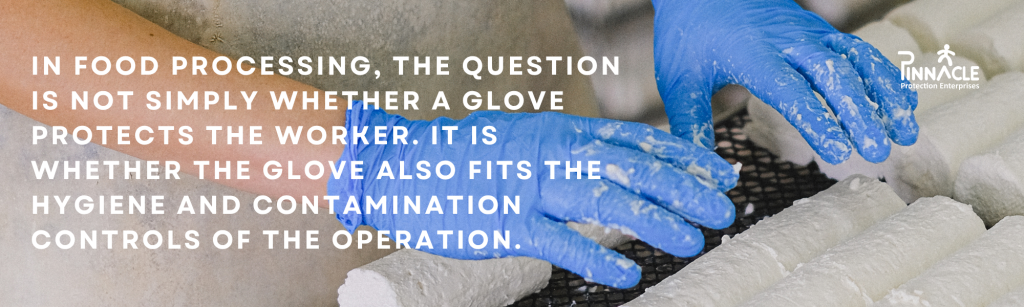
Coloured nitrile gloves can provide stronger visual contrast with many food products. Pinnacle supplies blue, black and green nitrile options for different applications.
Glove colour can also support existing colour-coded hygiene controls within a food processing operation.
This does not mean colour alone prevents contamination. It is one practical consideration within the wider PPE and hygiene process.
Why Pinnacle Recommends Nitrile for Food Processing
Pinnacle recommends nitrile gloves for food processing rather than latex.
The appropriate nitrile glove will depend on what the employee is doing and the environment in which the glove is being used.
A team handling and packing products may require a different glove from employees working in a wet fish or meat processing environment.
Blue and Black Nitrile for Lighter Food Processing
For smaller or lighter food processing operations, blue or black nitrile examination gloves can be suitable for activities such as handling, packing and light processing.
These gloves are powder-free and latex-free.
The use of coloured gloves can also provide useful visual differentiation within an operation, particularly where colour coding is already part of the site’s hygiene controls.
For procurement teams, consistency is important. Once a glove specification has been established, replacement products should meet the same requirements rather than being substituted simply because another product is temporarily cheaper or more readily available.
Green Nitrile for Heavy-Duty Processing
More demanding food processing environments can require a more robust glove.
Fish and meat processing operations may involve high water use, frequent washing and heavier handling requirements. Pinnacle’s Green Nitrile Chemical Gloves are designed for heavy-duty cleaning and chemical protection.
They feature a flock-lined interior, elbow-length gauntlet safety cuff and diamond-pattern palm for wet and dry handling.
The distinction is important. A glove selected for light food handling should not automatically be treated as suitable for heavy-duty processing or cleaning simply because both products are made from nitrile.
Choosing the Right Nitrile Glove for the Operation
The best place to start is the task rather than the product catalogue.
Before ordering food processing gloves, procurement teams should consider:
- What is the employee doing?
- Is the task handling, packing, light processing or heavier processing?
- Is the working environment wet or dry?
- How frequently are gloves changed?
- What glove colour is appropriate for the operation?
- Is a latex-free glove required?
- Should the glove be powder-free?
- Does the glove provide the grip and durability required for the task?
Once these requirements have been established, the product specification can be documented for future orders.
This gives procurement teams a reference point when reordering and reduces the risk of substituting a different glove simply because the product name appears similar.
What About Latex Household Gloves?
Pinnacle supplies latex household gloves for applications such as general cleaning. That does not mean those gloves are recommended for food processing.
The application determines the appropriate glove.
A reusable household glove can be suitable for general cleaning tasks, while food processing requires a different set of considerations around glove material, foreign body visibility and the demands of the production environment.
This distinction becomes particularly important for businesses purchasing PPE across multiple departments. A glove that is suitable for general cleaning should not automatically be transferred into a food production area.
You can view the wider disposable and reusable gloves range on the Pinnacle PPE website.
What Procurement Teams Should Check Before Ordering Food Processing Gloves
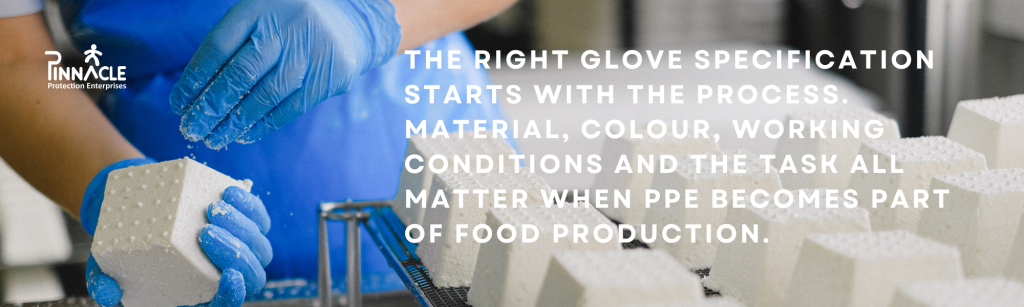
Glove purchasing can become difficult when different departments order different products without a consistent specification.
A better approach is to establish a standard for each application.
Build a Well Considered Glove Specification
A procurement specification can include:
- Glove material
- Latex-free requirement
- Powder-free requirement
- Colour
- Size range
- Intended application
- Wet or dry working conditions
- Required grip
- Replacement requirements
- Packaging and ordering quantities
This creates a reference point for repeat orders.
It also helps prevent a common PPE purchasing problem: choosing a replacement glove based on availability or price without checking whether it actually meets the original requirement.
For a food processing business, the question should be whether the replacement glove meets the operational requirement.
Frequently Asked Questions About Food Processing Gloves
Pinnacle does not recommend latex gloves for food processing. Nitrile is recommended as a latex-free alternative, with coloured nitrile options providing useful visual contrast in food handling environments.
Pinnacle recommends nitrile because it provides a latex-free alternative and is available in colours that can provide stronger visual contrast against food products.
The specific glove should still be selected according to the task and working environment.
For Pinnacle’s food processing applications, nitrile is the recommended option.
However, the right nitrile glove still depends on the application. Lighter handling and packing work may require a different glove from heavy-duty wet processing.
Coloured gloves can provide stronger visual contrast against food products and can support colour-coded hygiene controls within an operation.
The specific colour system should be determined by the food business according to its own processes.
Blue and black nitrile examination gloves can be suitable for lighter handling, packing and processing applications.
For more demanding wet environments, Pinnacle also supplies green nitrile chemical gloves with a longer cuff and grip pattern.
Pinnacle’s recommended nitrile options for food processing are powder-free.
Powder-free gloves remove glove powder as an additional consideration within the working environment.
The Right Glove Is Part of the Food Safety Process
Gloves are one part of a food processing operation’s wider hygiene controls, but they are used directly by employees throughout production.
That makes the choice of glove material worth getting right.
For Pinnacle, the recommendation is straightforward: food processing operations should use nitrile rather than latex gloves, with the specific nitrile glove selected according to the task and environment.
Blue and black nitrile gloves can suit lighter handling and packing applications, while more demanding wet-processing environments may require a heavier-duty option such as Pinnacle’s green nitrile chemical glove.
The objective is to specify a glove that fits the way the operation actually works.
Looking for PPE for your food processing environment?
Explore the full PPE product range or contact Pinnacle for guidance on selecting the appropriate PPE for your operation.